





/ Overview
Our Market Research Approach in Abu Dhabi
Our market research approach in Abu Dhabi integrates secondary research, primary fieldwork, market sizing, and evidence-based analysis to help businesses evaluate opportunities and make informed strategic decisions. Our five-step methodology covers the full research process, from establishing business objectives and collecting market intelligence to validating findings and developing practical recommendations.
We examine market conditions beyond published statistics, incorporating local industry perspectives, customer behaviour, and commercial realities. This helps organisations understand market demand, competitive dynamics, investment considerations, and the factors influencing business decisions across Abu Dhabi.
/ Our Method
Our Market Research Methodology in 5 Steps
Our research process consists of five interconnected stages, with the methodology and level of investigation tailored to the project’s objectives, industry, and market requirements.
-
Define the business decision
We establish the commercial questions driving the research, whether related to market entry, investment feasibility, business expansion, pricing, or partner selection, and define the evidence needed to address them.
Output: Research scope, objectives, and research plan.
-
Desk research
We review Abu Dhabi and UAE economic statistics, regulatory publications, sector reports, and company information to establish a market baseline and determine where further investigation is necessary.
Output: Preliminary market assessment and research gaps.
-
Primary research & fieldwork
We collect direct insights from customers, distributors, industry professionals, and relevant decision-makers to examine market behaviour and commercial practices. Surveys and site assessments are incorporated when appropriate.
Output: Primary research findings and market insights.
-
Market sizing & triangulation
When required, we estimate market potential through top-down and bottom-up calculations, testing assumptions against industry evidence, customer activity, and independent data sources.
Output: Market sizing model, validated assumptions, and supporting analysis.
-
Recommendations & decision support
We interpret the findings to identify strategic options, assess potential risks, and prioritise opportunities that align with your business and investment objectives.
Output: Research report, strategic recommendations, and decision-support materials.
/ Data Sources
Which Data Sources Do We Use in Abu Dhabi?
Market research in Abu Dhabi requires information from credible public institutions, industry publications, company disclosures, and direct market engagement. We assess the relevance and reliability of each source, combining available evidence to identify market trends, verify assumptions, and address information gaps.
| Source type | Examples | Research application |
|---|---|---|
| Official statistics | Statistics Centre – Abu Dhabi (SCAD), Federal Competitiveness and Statistics Centre (FCSC), Central Bank of the UAE | Population, economic indicators, trade, and sector-level data |
| Ministries & regulators | Abu Dhabi Department of Economic Development (ADDED), Abu Dhabi Investment Office (ADIO), sector-specific regulators | Investment policies, licensing requirements, and sector developments |
| Chambers & industry bodies | Abu Dhabi Chamber, industry associations, professional organisations | Industry networks, market participants, and potential partners |
| Industry & company data | Corporate reports, financial disclosures, sector publications, and commercial databases | Competitive landscape, market performance, and industry benchmarks |
| Primary research | Executive interviews, surveys, business site visits, and customer observations | Customer needs, purchasing behaviour, pricing, and validation of secondary findings |
/ Fieldwork
How We Run Primary Research and Fieldwork in Abu Dhabi
Conducting primary research in Abu Dhabi involves understanding the emirate’s diverse business community, consumer groups, and sector-specific decision-making processes. We use Arabic and English interviews, surveys, and field observations to obtain first-hand insights, adapting each research activity to the project’s objectives and target respondents.
Fieldwork may take place in Abu Dhabi City, Al Ain, Al Dhafra, and relevant commercial and industrial districts across the emirate. Depending on the assignment, respondents may include corporate executives, purchasing managers, industry specialists, distributors, public-sector representatives, and consumers.

Methods
In-depth interviews, quantitative surveys, site visits, retail and distribution audits, and mystery shopping, selected according to research objectives.
Languages
Interviews and surveys are conducted in Arabic and English, with additional language arrangements considered for specific respondent groups.
Scheduling
Fieldwork planning considers respondent availability, local working hours, public holidays, Ramadan, and relevant operational requirements.
Respondent recruitment
Participants are selected through industry mapping, business networks, sector associations, and targeted screening based on the research requirements.
/ Market Sizing
How We Size and Validate a Market in Abu Dhabi
We estimate market size using official economic indicators, sector demand, customer activity, pricing information, and primary research. Top-down and bottom-up calculations are compared to verify assumptions and determine a defensible market size range.
Top-down
Start with Abu Dhabi and UAE economic statistics, industry reports, and trade data, then refine the estimate by sector, geography, customer segment, and relevant market share assumptions.
Triangulation
Examine differences between both calculations, review industry feedback and supporting evidence, and reconcile assumptions to develop a validated market size range.
Bottom-up
Calculate demand based on potential customer numbers, expected purchase volumes, and average market prices, incorporating primary research to test commercial assumptions.
Market Sizing: Industrial Warehouse Automation in Abu Dhabi
Business question
What is the estimated annual market value of warehouse automation systems purchased by logistics and industrial operators in Abu Dhabi?
Top-down estimate
AED 960m
Sector expenditure and automation investment assumptions
Bottom-up estimate
AED 880m
Potential customer facilities × annual automation expenditure
Triangulation
The estimates are assessed against technology adoption rates, facility investment cycles, equipment pricing, and supplier perspectives to reconcile differences in market assumptions.
Estimated market range
AED 880–960m
Decision implication: Assess priority customer segments and evaluate market entry, distribution, and system integration opportunities.
/ By Decision
How the Method Changes by Business Decision
Different business decisions require different research approaches. We combine market analysis, primary research, competitive intelligence, and commercial evaluation methods to address each project’s objectives and support informed decision-making.
| Your decision | Method mix | Deliverable | Service page |
|---|---|---|---|
| Is there enough demand? | Desk research + customer interviews + market sizing | Market assessment | Market Research → |
| Should we enter, and how? | Market sizing + competitor and regulatory analysis + distributor interviews | Entry options and roadmap | Market Entry Strategy → |
| How do we plan for future growth? | Market forecasting + scenario analysis + stakeholder interviews | Strategic growth roadmap | Strategic Planning → |
| Is this acquisition worth it? | Commercial due diligence + customer and industry interviews | Due diligence report | Mergers and Acquisitions → |
| Where do costs hit our margins? | Value chain mapping + cost analysis + supplier interviews | Value chain map and priorities | Value Chain Analysis → |
| Who is gaining ground? | Competitor profiling + pricing audits + customer interviews | Competitive benchmark | Competitive Benchmarking → |
| Which partner or distributor? | Partner mapping + distributor screening + structured interviews | Partner shortlist | Distribution & Strategic Partnership → |
| How do B2B buyers decide? | Procurement analysis + decision-maker interviews + customer segmentation | Buyer profiles and selection criteria | B2B Consumer Analysis → |
We are experts in the following primary sectors of the Abu Dhabi market
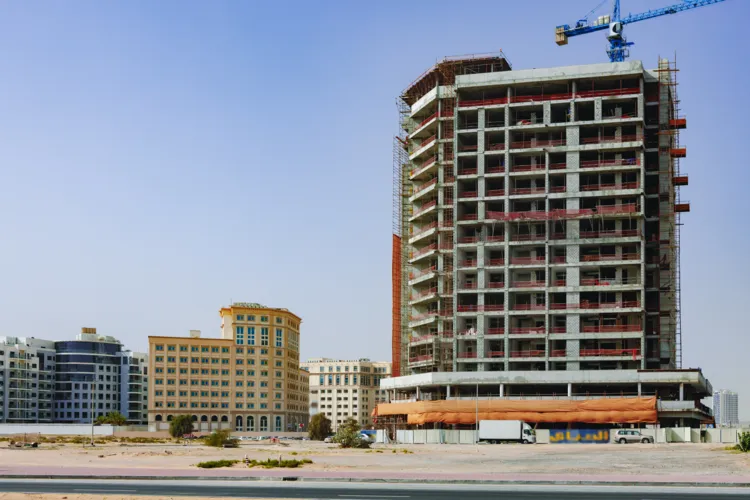
Construction
Enhancing project outcomes through digital transformation, risk management, and sustainable construction strategies.
Healthcare
Empowering healthcare providers with technology and operational excellence to improve patient outcomes and system efficiency.

Energy
Driving the energy transition with innovative strategies in sustainability, efficiency, and digital energy management.

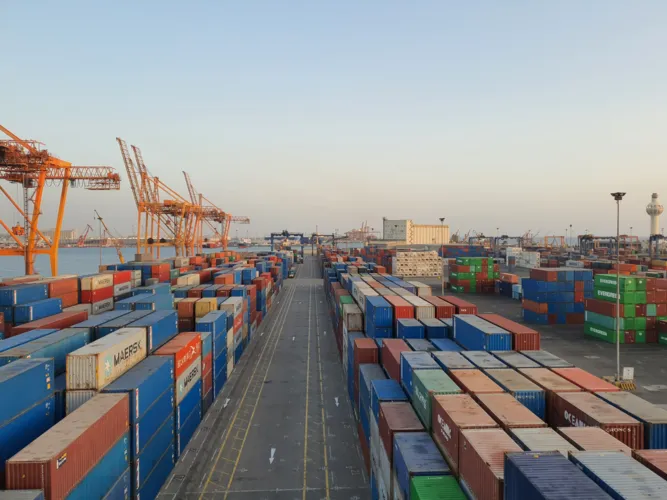
Supply Chain & Logistics
Optimizing supply chains with data-driven logistics solutions that reduce costs, boost delivery speed, and support regional growth.
Transport & Mobility
Shaping the future of movement with integrated mobility solutions, smart infrastructure, and user-centric design.

/ Timelines
How Long Does Market Research in Abu Dhabi Take?
Market research projects in Abu Dhabi typically require 6–12 weeks, depending on the scope, research methods, stakeholder accessibility, and availability of reliable market information. Smaller desk-based assignments may be completed sooner, while extensive surveys or detailed feasibility assessments can require longer research periods.
Project schedules generally include progress reviews and the sharing of preliminary findings as evidence becomes available. Research teams are organised according to the assignment’s complexity, drawing on analysts, project management, industry specialists, and fieldwork support when needed.
| Project type | Typical duration | Typical team |
|---|---|---|
| Desk-led market assessment | 3–5 weeks | Project manager + research analysts |
| Interview-based market study | 6–8 weeks | Project manager + analysts + sector specialists |
| Large-scale survey / fieldwork | 8–12 weeks | Research team + fieldwork coordinators |
| Feasibility study | 8–14 weeks | Project manager + sector and financial specialists |
/ Method in Practice
How Our Research Methods Work in Practice
Construction
Assessing Construction Market Opportunities in Abu Dhabi
Issue
A construction materials supplier considering expansion into Abu Dhabi needed to evaluate market demand, competitive conditions, and opportunities within the local construction supply chain. Differences in project requirements, contractor purchasing behaviour, and distribution channels created uncertainty around market entry priorities.
Approach
The assessment combined construction pipeline analysis, material demand forecasting, competitor benchmarking, and interviews with contractors, developers, and procurement managers. We examined purchasing requirements, pricing structures, supplier selection criteria, and distribution practices to evaluate the market’s commercial potential.
Recommendation
We recommended targeting construction segments with consistent procurement demand, strengthening relationships with major contractors, and developing a phased distribution strategy. The proposed roadmap also addressed competitive pricing, channel development, and customer acquisition priorities.
Engagement ROI
Healthcare
Evaluating Healthcare Service Expansion in Abu Dhabi
Issue
A private healthcare provider evaluating expansion in Abu Dhabi needed to understand patient demand, existing healthcare capacity, and local competitive conditions. Identifying suitable locations and priority medical services required a detailed assessment of population needs, service accessibility, and financial viability.
Approach
The research combined healthcare demand projections, provider benchmarking, capacity analysis, and stakeholder interviews. Patient catchment areas, facility utilisation, service availability, pricing, and regulatory considerations were evaluated to identify potential gaps in healthcare provision.
Recommendation
We recommended prioritising medical specialities with identifiable demand gaps and exploring expansion in locations with suitable patient catchment potential. The proposed strategy included phased capacity development, service portfolio planning, and opportunities for referral partnerships.
Engagement ROI
Supply Chain & Logistics
Optimising Logistics Networks and Warehousing Capacity in Abu Dhabi
Issue
A logistics operator planning to expand its distribution network in Abu Dhabi needed to assess warehouse demand, transport efficiency, and future infrastructure requirements. Variations in customer concentration, industrial activity, and service expectations complicated decisions on warehouse locations and network investments.
Approach
The study combined freight flow mapping, logistics demand analysis, warehouse capacity assessments, and competitor benchmarking. Interviews with industrial customers and logistics stakeholders provided further evidence on transport costs, distribution requirements, service coverage, and warehouse utilisation.
Recommendation
We recommended reviewing warehouse locations against customer demand and transport connectivity, optimising distribution routes, and prioritising capacity investments in commercially important logistics corridors. The roadmap also considered digital visibility solutions and potential third-party logistics partnerships.
Engagement ROI
Want to know who we are? About Market Research Abu Dhabi →
Frequently Asked Questions
-
We calculate market potential using top-down and bottom-up methods supported by official economic statistics, industry information, customer demand, and primary research. Both estimates are examined against independent evidence to establish a market size range supported by documented assumptions.
-
We draw on statistics from SCAD, the Central Bank of the UAE, government and regulatory publications, industry reports, company disclosures, and primary research. Sources are chosen according to the sector, research objectives, and availability of reliable information.
-
We evaluate competitors through industry analysis, stakeholder interviews, pricing assessments, and distribution channel research. Depending on the market, benchmarking may examine product and service offerings, customer segments, commercial positioning, and operational capabilities.
-
We interview business decision-makers and analyse procurement requirements, purchasing priorities, supplier evaluation criteria, and budget considerations. The findings help businesses understand customer segments, identify potential buyers, and develop more targeted commercial strategies.
-
We conduct research interviews in Arabic and English according to respondent preferences and project requirements. Additional language support can be arranged where specific audiences or fieldwork conditions require it.
-
Yes. Depending on the study, fieldwork can extend to Al Ain, Al Dhafra, and other commercial or industrial locations across Abu Dhabi. Geographic coverage is determined by the target respondents and research objectives.
-
Most market research engagements require approximately 6–12 weeks, depending on the scope, industry, and fieldwork requirements. Focused desk-based studies may take 3–5 weeks, while large-scale surveys and complex feasibility assessments may require additional time.
-
Where appropriate, we may collaborate with specialised fieldwork partners for respondent recruitment, survey administration, or local data collection. Research design, quality assurance, analysis, and final recommendations remain under our project team’s oversight.
/ Contact Us
Speak to advisors with experience in the Abu Dhabi market
Address
C40-P1, Yas Creative Hub, Yas Island
PO Box: 769619
Abu Dhabi, United Arab Emirates