
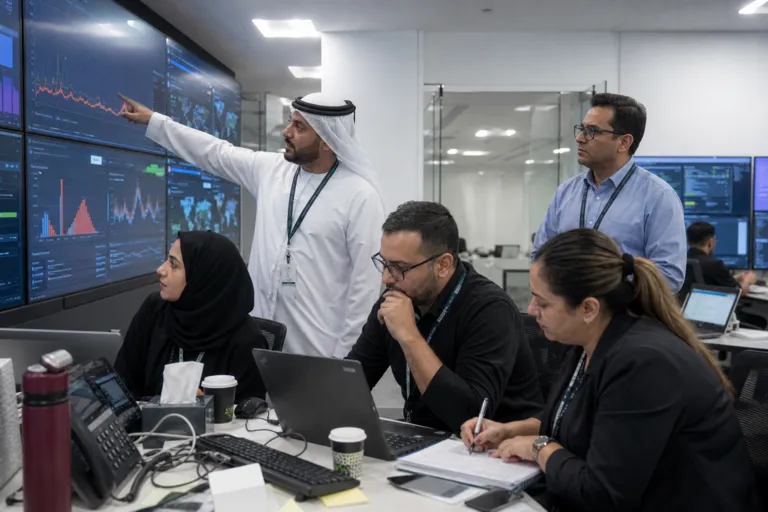
The Abu Dhabi cybersecurity market in 2026 sits inside a region facing intense and fast-changing pressure. UAE authorities were intercepting between 90,000 and 200,000 cyberattacks per day before the outbreak of the current regional conflict. Reports say that figure surged to between 600,000 and 800,000 daily attempts, described as an average increase of approximately 3.5 times. For Abu Dhabi organizations, this kind of volume changes how leaders think about resilience. It also raises the operational cost of staying online, restoring services, and defending identities.
Threat patterns are also shifting toward identity and deception. The Abu Dhabi Emergency, Crisis and Disaster Management Centre identified phishing, account breaches, AI-enabled deepfakes, and identity theft as the most prevalent threats during periods of emergency. At the same time, Iran-linked groups were reported to be deploying AI tools, including large language models, for reconnaissance, phishing, malware development, and deepfake-driven information warfare. This mix pushes organizations to harden credential workflows, improve detection, and prepare communications teams for synthetic media risks.
Spending and Investment Priorities: Security Moves Up the List
Spending signals show why budgets are being debated in boardrooms. A Telecoms.com Intelligence Annual Industry Survey 2025 found that security has emerged as the leading investment priority for telecom operators in 2026, driven by escalating cyberattacks. The survey drew responses from over 200 professionals across communication service providers, vendors, and system integrators. The report also warned that the diversity of investment priorities could stretch budgets thin in 2026. It highlighted threats including denial-of-service attacks, malware campaigns, service delivery disruptions, and data exfiltration attempts.
Investment is increasingly tied to AI governance, but confidence is uneven. Artificial intelligence-powered social engineering was cited by 63% of IT and cybersecurity professionals as the leading cybersecurity threat “next year,” compared with 54% for ransomware and 35% for supply chain attacks. Yet only 13% said they feel “very prepared” to handle generative AI risks, while 25% said they are “not very prepared.” Over half still said AI and machine learning remain top investment priorities, creating a gap between ambition and readiness that affects procurement, training, and operating models.
Workforce capacity is another constraint shaping the Abu Dhabi cybersecurity market. Only 18% of respondents reported strong talent pipelines, and 44% expect difficulty hiring for digital trust roles in 2026. In parallel, global loss signals keep pressure on leadership teams. One source reported that worldwide, the average cost of a single data breach is approximately $4.44 million, while another referenced an average data breach cost of $4.4 million. Even when these figures are global, they frame risk discussions for Abu Dhabi operations that serve customers, critical services, and government-linked ecosystems.
For 2026, the investment story is therefore less about a single tool and more about coverage and execution. Regional reporting attributes the majority of the surge in daily attempts to state-backed actors, while industry commentary emphasizes that regulation can raise the floor but cannot replace operational maturity. That implies sustained spending on monitoring, response capability, and identity controls, especially as phishing, account breaches, deepfakes, and identity theft remain prominent during emergencies. In practice, budgets will keep shifting toward resilience programs that can function under both high-volume attacks and AI-enhanced manipulation.
What is driving the Abu Dhabi cybersecurity market in 2026?
How many cyberattacks per day are being intercepted in the UAE during the current conflict period?
Which threats are most prevalent during emergencies in Abu Dhabi?
Why is security rising on 2026 spending agendas in telecoms?
How prepared do professionals feel for generative AI risks affecting the Abu Dhabi cybersecurity market?