
Luxury positioning remains central to how the Abu Dhabi luxury hospitality market is discussed heading into 2026. The UAE context is clear: Mordor Intelligence estimates the UAE hospitality market expands from USD 27.87 billion in 2025 and USD 30.07 billion in 2026 to USD 43.92 billion by 2031, at a 7.87% CAGR from 2026 to 2031. In the same report, luxury properties account for 43.76% of UAE hospitality market size in 2025. Statista adds that nearly 71% of the country’s upcoming hotel projects through 2030 are in the luxury or upscale category, reinforcing the premium skew that frames Abu Dhabi’s forward pipeline and rate strategy.
Abu Dhabi’s immediate demand picture shows both volume and spending strength. Gitnux reports Abu Dhabi’s hotel sector recorded AED 5.8 billion revenue in 2023, up 35% from 2022, attributed to luxury segment expansion. The same source says Abu Dhabi hospitality jobs reached 85,000 in 2023, up 18% year over year, signaling operational scaling alongside the upscale push. On the visitor-spend side, Wifitalents reports the average daily spend per tourist in Abu Dhabi rose to AED 1,100 in 2023. Taken together, these indicators suggest high-end visitor demand is not only arriving, but also supporting premium on-property and in-destination spend patterns that matter for luxury operators.
2026 Outlook: Room Rates, Occupancy Signals, and New Supply
Rate momentum in Abu Dhabi is being reinforced by event-driven compression. Travel And Tour World reports that Abu Dhabi opened 2026 with occupancy exceeding 85%, alongside double-digit rate growth and near sell-out conditions during major events. The article also points to a steady pipeline of conferences, exhibitions, and cultural festivals scheduled throughout 2026, supporting the case for sustaining elevated ADR and RevPAR levels if demand patterns hold. For additional UAE context, Arabian Business reports that across the UAE, Abu Dhabi recorded hotel occupancy of 82.8% for city hotels and 78.6% for resorts, with average daily rates rising 21.3%. Those figures help frame how pricing power is being observed in the emirate’s hotel performance metrics.
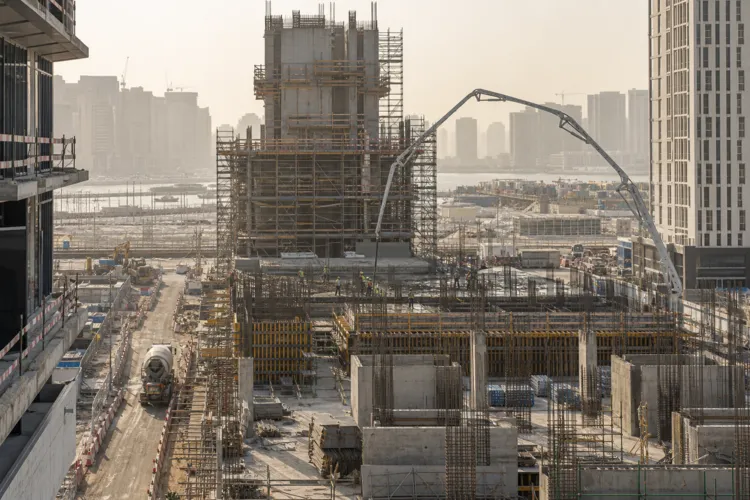
Supply growth is the other half of the 2026 equation, and Abu Dhabi has visible inventory in the near-term pipeline. Gitnux states Abu Dhabi’s hotel pipeline stands at 15,000 rooms for 2024–2027. That delivery window overlaps with a market narrative of strong January 2026 trading and an events calendar that tightens availability. At a national level, project bias also leans premium: Statista says nearly 71% of upcoming UAE hotel projects through 2030 are luxury or upscale. This mix suggests Abu Dhabi’s next wave of rooms may still target higher categories, which can support brand positioning, but also raises the importance of maintaining consistent high-end demand across peak events and non-peak periods in 2026.
Operational economics provide additional context for luxury strategy in 2026. Gitnux reports the UAE luxury hotel segment generated AED 18.7 billion in 2023, accounting for 58% of total hotel revenues, underscoring how much revenue is concentrated in premium tiers. Wifitalents adds that taxes and fees on UAE hotel rooms average 20% of the base rate, payroll costs account for 28% of total hotel revenue, and gross operating profit margins average 35–40%. Those cost and margin benchmarks matter for Abu Dhabi’s luxury operators as they balance rate growth with profitability goals, especially when occupancy spikes above 85% during major events and competition intensifies as pipeline rooms move toward opening.
What is the confirmed hotel pipeline for Abu Dhabi through 2027?
What do the latest signals say about Abu Dhabi occupancy and rate momentum in 2026?
How strong is high-end visitor spending in Abu Dhabi?
How is the broader UAE project mix shaping the Abu Dhabi luxury hospitality market outlook?