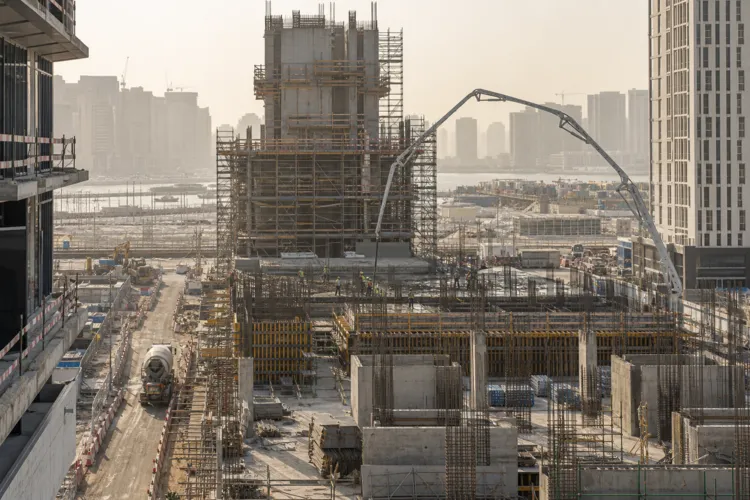

Facilities management in Abu Dhabi is moving in step with broader UAE real estate and infrastructure expansion, because new-builds and renovations both create long-lived operations demand. Mordor Intelligence projects the UAE construction market at USD 127.13 billion in 2026, rising to USD 167.27 billion by 2031, with 76.9% of 2025 value tied to new-build activity and renovation advancing at a 5.79% CAGR through 2031. Residential building captured 43.8% of UAE construction share in 2025, while infrastructure is forecast to post the fastest 5.23% CAGR through 2031. For Abu Dhabi, the same report frames a long runway in public works through Abu Dhabi’s USD 65.3 billion infrastructure envelope, which supports a sequenced slate of roads, housing, and renewable assets.
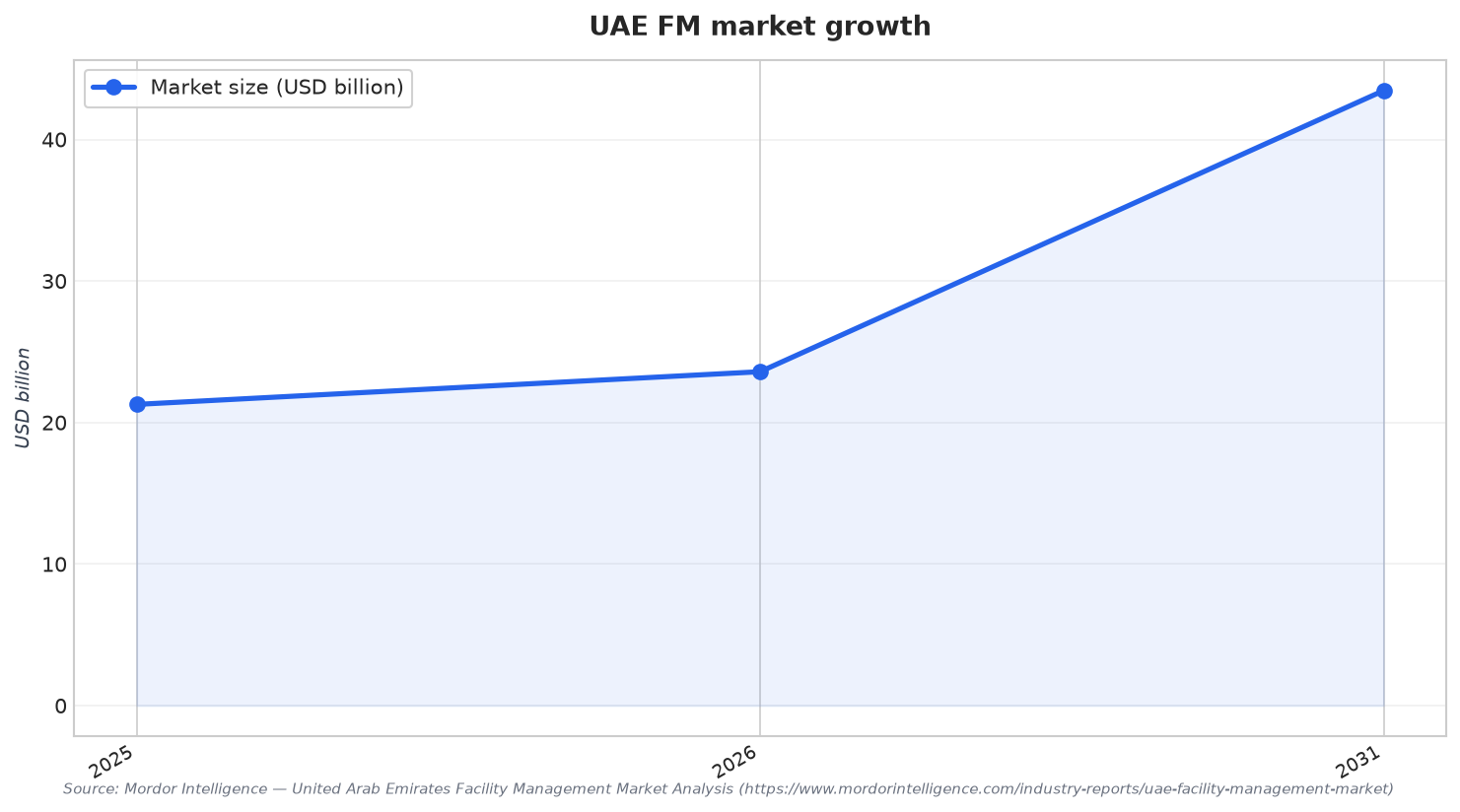
This development pipeline matters because the UAE facility management market is forecast by Mordor Intelligence to expand from USD 23.59 billion in 2026 to USD 43.45 billion by 2031, registering a 12.99% CAGR from 2026 to 2031. In 2025, hard services held 60.92% of market share, while outsourced models controlled 64.88%, signaling how owners increasingly buy integrated delivery rather than piecemeal work. Demand also clusters by asset type. Commercial facilities captured 42.96% of UAE FM revenue in 2025, and healthcare is forecast to expand at a 12.28% CAGR to 2031. Separately, a 2024 projection cited by Astute Analytica points to around 1,200 privately-owned commercial complexes across Dubai and Abu Dhabi requiring comprehensive FM services, while around 800 government buildings across Abu Dhabi and Dubai are expected to manage operations internally.
Smart Buildings and Compliance Are Rewriting 2026 FM Requirements
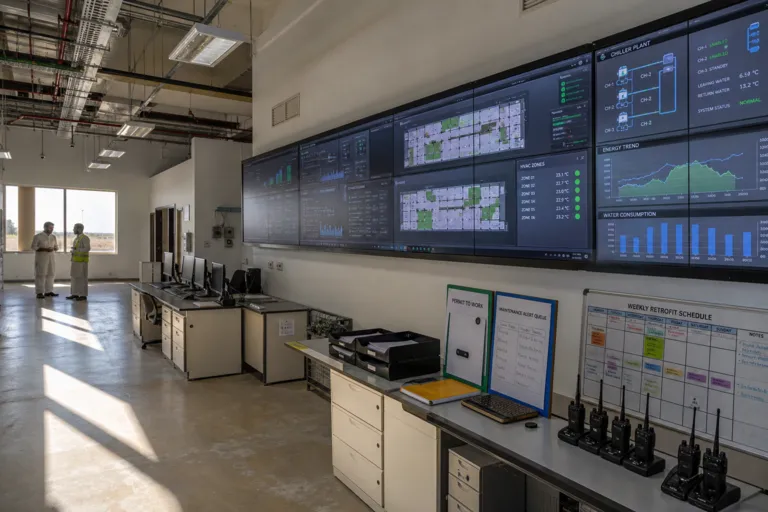
Smart-building demand is shifting FM from reactive work to data-led operations, and it is increasingly tied to compliance. Mordor Intelligence highlights the impact of IoT-enabled performance in flagship assets, citing Burj Khalifa where an IoT platform cut maintenance hours by 40% and pushed asset reliability close to 99.95%. MarkWide Research adds that IoT solutions represent the fastest-expanding technology category as Dubai’s building codes increasingly require predictive maintenance infrastructure. Regulation also raises the bar for vendor qualification. MarkWide Research states that UAE government contracts now mandate ISO 41001:2018-certified facility management providers, filtering out unqualified operators. It also references MOHAP infection-control mandates and Dubai Municipality building energy audit requirements, both of which compress procurement cycles and steer buyers toward certified operators that can deliver integrated compliance, maintenance, and IoT-enabled monitoring under one contract structure.
In Abu Dhabi specifically, sustainability frameworks and estate scale are reshaping what “good” looks like in 2026 contracting. A Futurism report notes Abu Dhabi’s Estidama Pearl Rating System, which grades developments on environmental performance, and it cites an Abu Dhabi 22% carbon emission reduction target by 2027 that pushes facility teams toward energy audits, renewable energy integration, and resource conservation measures. Contractor and platform consolidation is also changing the competitive landscape. The same source reports that, in July 2023, Aldar Properties, International Holding Company (IHC), and ADNEC Group merged their property and facilities management businesses within the Aldar Estates platform, creating a regional entity managing approximately 135,000 residential units plus prime commercial spaces. It also states that Farnek expanded operations throughout Abu Dhabi in April 2024, securing contracts including total facilities management for Mina Zayed innovation neighborhood, Etihad Airways Engineering, Barakah Nuclear Power Plant, and the F1 Grand Prix at Yas Marina Circuit.
For buyers and suppliers in the Abu Dhabi facilities management market, the 2026 playbook is clear: align to certification, build integrated offerings, and deliver measurable performance. MarkWide Research positions ISO 41001:2018 as a gatekeeper for government work, while Mordor Intelligence shows outsourcing already represented 64.88% of UAE market size in 2025. Technology adoption strengthens the business case when it directly reduces downtime and improves outcomes. Mordor Intelligence cites Emirates Global Aluminium recording USD 100 million in financial gains after deploying 80 Industry 4.0 use cases that cut downtime by 50% and lifted overall equipment effectiveness by 12%. In practice, that points to a contractor landscape where owners increasingly expect unified hard and soft services, sustainability reporting, and sensor-driven maintenance as standard—not premium add-ons.
What is shaping the Abu Dhabi facilities management market in 2026?
How big is the UAE facility management market expected to be by 2031?
What role does outsourcing play in facilities management demand?
Which end-user segments are important for FM growth in the UAE?
What proof points show smart-building platforms can improve FM outcomes?