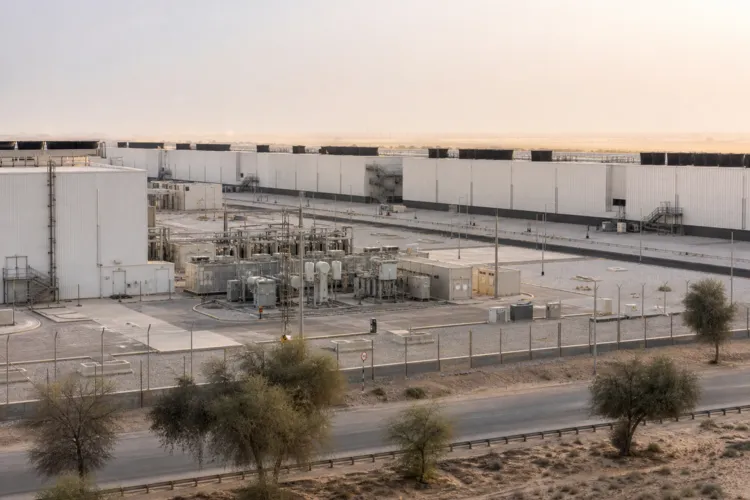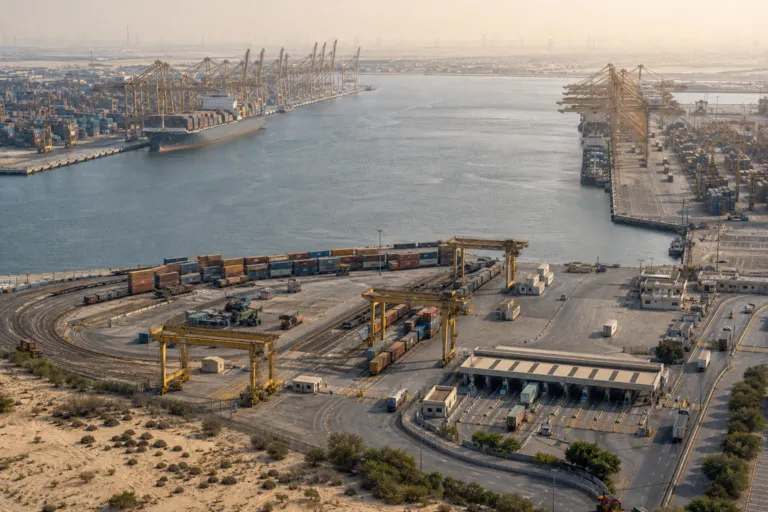
Momentum in the Abu Dhabi ports and maritime market is closely tied to AD Ports Group results across ports, maritime services, and logistics. In 2025, AD Ports Group reported record revenue of AED 20.8 billion, up 20% year-on-year, and net profit of AED 2.1 billion, up 17% year-on-year. The ports segment showed a clear split in performance. Container throughput grew 23% to 7.7 million TEU in 2025, while ro-ro volumes contracted 29% to 1 million units and cruise passengers fell 10% to 474,000. Ports segment revenue reached AED 2.86 billion in 2025, up 21%, driven mainly by 59% growth in container revenues, a 33% increase in bulk and general cargo operations, and contributions from CMA Terminals Khalifa Port.
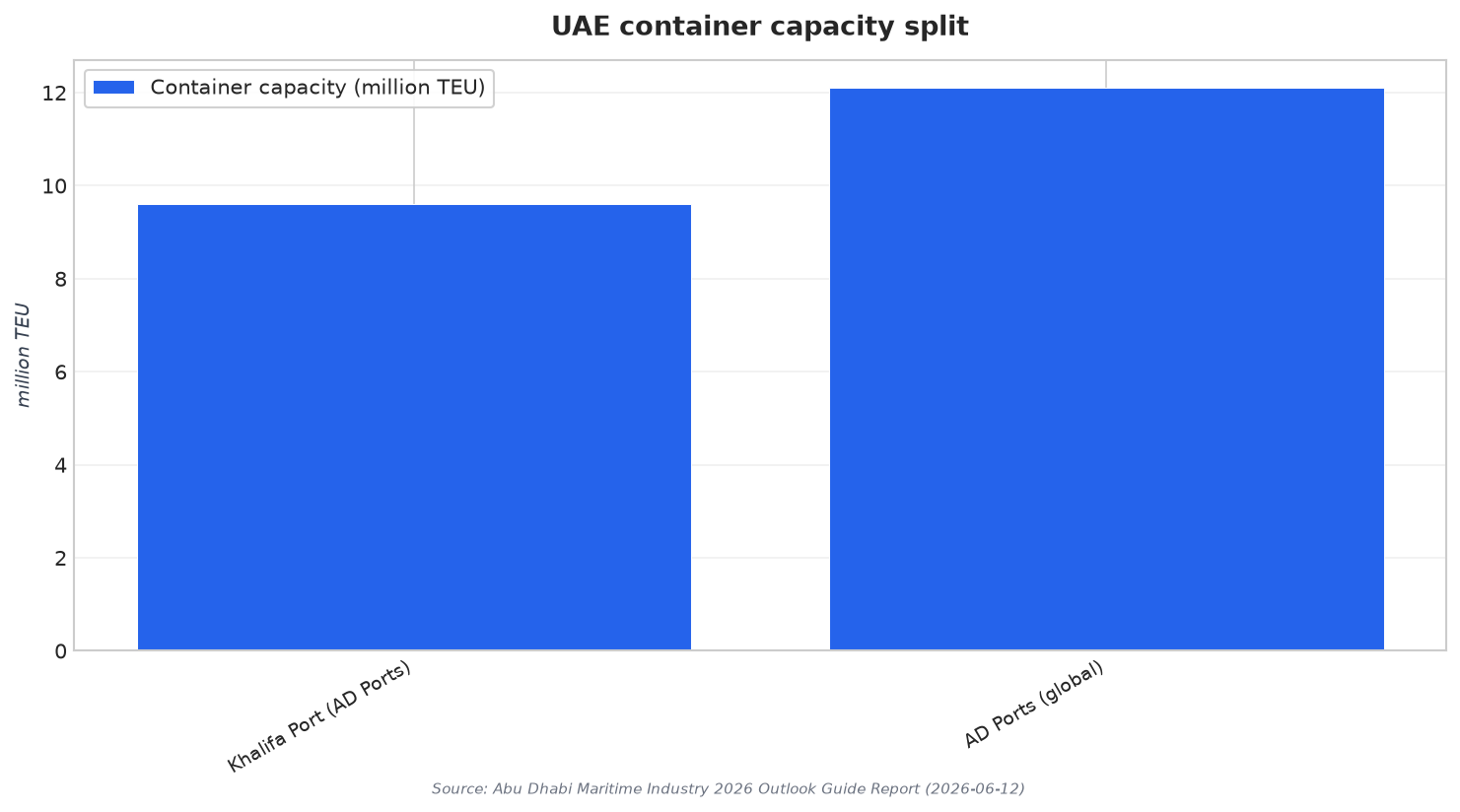
Terminal capacity and how it is deployed are central to the 2026 outlook. AD Ports described its container terminal business as UAE-heavy, with Khalifa Port accounting for 9.6 million TEU of its 12.1 TEU global capacity. It also stated that 86% of the group’s containers were handled in the UAE. Utilization data adds detail on where headroom exists. In Q1 2026, container capacity utilization stood at 54% in the UAE and 57% at Khalifa Port, while international utilization reached 65%, up from 58% in Q1 2025. In the same quarter, UAE container throughput declined 5% year-on-year and general cargo volumes dropped 23% year-on-year, but these declines were largely offset by international growth of 17% and 21% year-on-year, respectively.
Trade Lanes, Land Bridges, and Inland Capacity Planning
Corridor execution in 2026 is being built around multimodal links rather than relying on a single waterfront expansion. In Q1 2026, AD Ports established a land bridge to transport cargo from Fujairah and Khorfakkan through bonded customs corridors across the UAE to Khalifa Port, Jebel Ali Port, and Sharjah. The land bridge uses 800 trucks and four new daily rail services by Etihad Rail. Storage and resiliency are also part of the operational plan. AD Ports reported expanded warehousing and storage capacity for essential goods exceeding 76,000 m2, with plans to more than double to 188,000 m2, supporting inventory positioning as corridors and trade lanes scale.
Shipping line partnerships are a defining lever for Abu Dhabi terminals, because they shape network access, service frequency, and long-run commitment. Abu Dhabi Ports stated it formed a 30-year partnership with COSCO SHIPPING Ports to operate Khalifa Port’s second terminal, the CSP Abu Dhabi Terminal, and described the terminal inauguration as positioning Abu Dhabi as the regional hub for COSCO’s global network of 37 ports. It also referenced an AED 4 billion investment that would double handling capacity. In addition, Abu Dhabi Ports noted Fujairah Terminals was created through a 35-year concession with the Port of Fujairah, and that an agreement signed with EGA enables the usage of Capesize vessels to import raw materials through Khalifa Port.
For context within the UAE, Dubai’s Jebel Ali is frequently used as a benchmark for scale. One UAE-focused report stated Jebel Ali Port achieved its highest-ever throughput of 15.5 million TEU in 2024, while operating capacity stands at 19.4 million TEU annually. Another Middle East ports overview cited Jebel Ali’s annual capacity at approximately 19.3 million TEU and noted record breakbulk volumes in late 2025 reaching 5.36 million metric tonnes. Against that wider backdrop, Abu Dhabi’s approach combines terminal partnerships, corridor connectivity, and capacity headroom signals from utilization. The result is a container-led growth profile, while ro-ro and cruise volumes moved in the opposite direction in 2025.
What did AD Ports Group report for revenue and profit in 2025?
How did container throughput and other volumes change at AD Ports in 2025?
What do capacity utilization figures suggest for Khalifa Port in Q1 2026?
How are trade lanes being supported by corridor connections across the UAE in 2026?
What partnerships shape the Abu Dhabi ports and maritime market for container networks?