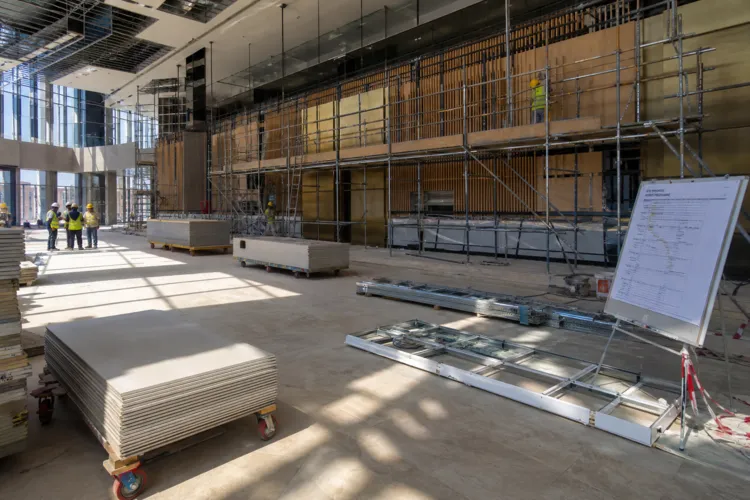

The Stargate UAE AI campus has become a shorthand for how fast Abu Dhabi wants to scale AI infrastructure. Reuters reported that the first 200 megawatts of a planned 5-gigawatt artificial intelligence campus in the United Arab Emirates should come online next year, according to an official from Abu Dhabi-backed cloud and AI firm G42. Reuters also described Stargate UAE as the first phase, built with partners that include Nvidia, OpenAI, Cisco, Oracle, and Japan’s SoftBank. Another report framed the UAE as hosting OpenAI’s largest project outside the US, describing a 5 GW hyperscale complex in Abu Dhabi. Together, these details point to a campus-sized approach to compute, not a single data center build.
This buildout changes cloud strategy because it concentrates capacity, partnerships, and delivery timelines in one place. Reuters said Stargate UAE is set to go online in 2026. The Next Web added that the campus is being built across approximately 19 square kilometres of desert south of Abu Dhabi, and that the first phase is a 200 megawatt compute cluster scheduled to come online by the end of 2026. The same report said the full build-out is designed to reach one gigawatt of capacity at a projected cost exceeding 30 billion dollars. While that one-gigawatt figure is distinct from the broader 5-gigawatt plan cited by Reuters, it still signals a cloud-style product: large blocks of standardized compute delivered in phases.
Energy is the other constraint that now sits in the foreground. Reuters said G42 previously stated the project would be powered by nuclear and solar power, as well as natural gas. A separate Reuters report on South Korea joining the project said South Korea will help build a power grid using nuclear power, gas and renewable energy for the Stargate project. This blend matters because it links the data campus to grid planning, not only to real estate and chips. It also ties Stargate UAE to energy infrastructure cooperation and supply chain coordination, since the same framework agreement discussed AI investment and infrastructure, AI supply chains, and AI research and development.
How Scale Rewrites Talent Demand
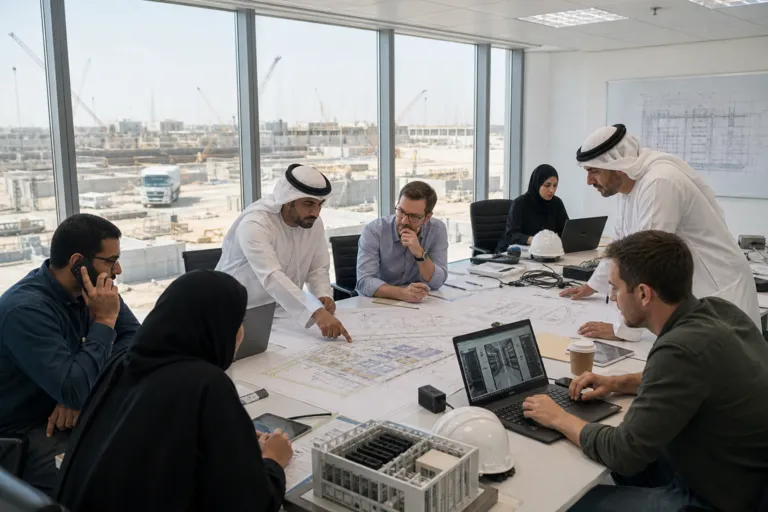
The campus scale also reshapes talent demand because it pulls more organizations into AI delivery, governance, and operations. A UAE-focused readiness survey cited by Consultancy-me (Roland Berger) found that just over half of surveyed organizations in the UAE already have an AI strategy aligned with national goals, while an additional 32% are developing one. The same source said 89% of organizations expect their AI budgets to increase over the next 12 months, and that 50% cite enhancing customer and citizen experiences as the primary objective. Large infrastructure projects like Stargate UAE increase the need for people who can translate these strategies into workloads, security controls, procurement, and operating models that can actually use large-scale compute.
Stargate UAE also makes regional demand signals harder to ignore. Consultancy-me reported that in the GCC, data usage is projected to surge 400% between 2022 and 2028. It also said global data center investment nearly doubled since 2022 to reach $500 billion in 2024, and that electricity consumption is set to more than double by 2030, fueled by AI demand. Separately, the ME Council warned that by 2030 the UAE’s AI sector alone may require approximately 61 billion liters of water per year. Even though these figures are broader than a single campus, they help explain why a 5GW plan forces simultaneous planning for compute, power, cooling, and staffing rather than treating each as a follow-on issue.
What is the Stargate UAE AI campus?
When does Stargate UAE come online?
How is Stargate UAE expected to be powered?
Why does Stargate UAE increase talent demand in the UAE?