
Abu Dhabi is positioning itself as a practical contender in the emerging hydrogen economy, even as some global markets slow due to policy uncertainty. A June 2026 report from the Abu Dhabi Chamber of Commerce and Industry (ADCCI) describes the emirate as one of the most strategically advantaged territories in the global hydrogen race, backed by abundant solar resources, efficient electricity infrastructure, industrial capability, and favorable financing conditions. The report says the UAE is projected to have one of the lowest levelized costs of hydrogen and ammonia by 2030, supporting export ambitions to early demand centers such as the European Union, Japan, and South Korea. Within the Abu Dhabi green hydrogen market, the emphasis is increasingly on getting projects operating and linking them to real buyers.
The institutional backbone includes the Abu Dhabi Hydrogen Alliance, described in a 2025 ScienceDirect paper as an effort to position the capital as a leader in green and blue hydrogen and to promote a hydrogen ecosystem. The alliance consists of Mubadala, ADNOC, and ADQ, reflecting a coordinated approach across investment, energy, and industrial development. On the ground, the same paper notes ADNOC’s “H2GO” refuelling station launched in late 2023, producing green hydrogen via an electrolyser powered by clean grid electricity, and hydrogen buses operating in Abu Dhabi and Dubai as tests of hydrogen-powered public transport. It also references test shipments of green hydrogen in ammonia form delivered to Germany, framed as evidence that exports to Europe can be viable.
From Molecules to Derivatives: Export Products Taking the Lead
ADCCI highlights a strategic shift away from exporting only pure hydrogen toward higher-value derivatives such as green ammonia, methanol, synthetic fuels, and Sustainable Aviation Fuel (SAF). The report lists initiatives in Abu Dhabi spanning green hydrogen-derived methanol and SAF using green hydrogen and captured CO₂, exploration of e-methane production and bunkering infrastructure, and expansion into green ammonia and synthetic fuels. It states these initiatives could unlock “billion dirhams” in unrealised export potential by 2029, alongside job creation and emissions reductions. The same report sets a clear volume ambition: Abu Dhabi has a 2031 production target of 1.4 million tonnes per year of low-carbon hydrogen, anchoring the scale needed for derivative and export-led business models.
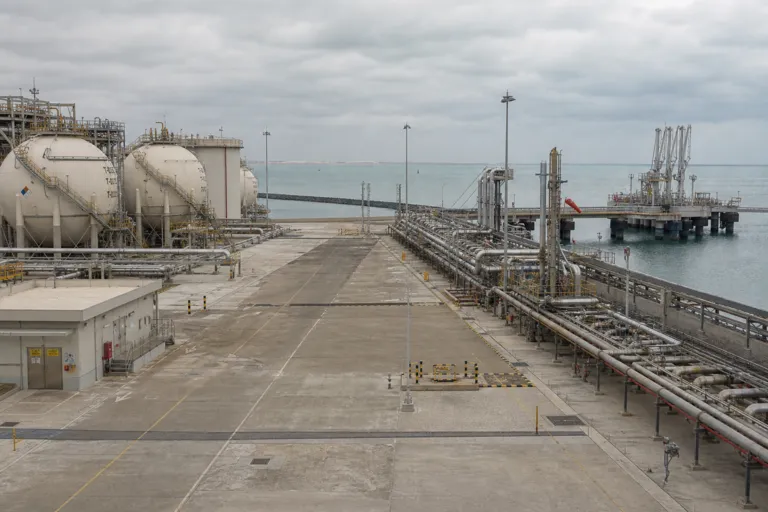
Concrete enabling assets around 2026 also show up in project-level figures. A 2026 KiTalent analysis says EWEC awarded the 1.5 GW Al Ajban Solar PV project to a Masdar-led consortium in 2024 at a development cost of $1.1 billion, targeting operational status in Q4 2026 and 1,500 construction jobs at peak activity. The same source says Abu Dhabi Ports allocated $300 million to hydrogen-ready logistics infrastructure at Khalifa Port and Ruwais, and that the H2 Magallanes partnership between Abu Dhabi Ports and Cepsa targets 4.6 GW of electrolyser capacity for green hydrogen export to Europe. It also describes the operational base as of early 2026 as 3.2 GW of solar capacity across Noor Abu Dhabi and Al Dhafra, 800,000 tonnes per year of CO₂ capture at the Al Reyadah facility at Emirates Steel Arkan’s Mussafah site, and a pilot electrolyser at Masdar City rated at 1.2 MW.
The biggest commercial constraint is not only production, but market pull and equipment readiness. ADCCI says long-term purchase agreements are critical, and notes that around 12% of low-carbon hydrogen projects globally have secured confirmed customers. Abu Dhabi’s response is “customer-aligned projects,” including the EMSTEEL–Masdar green steel pilot, described by ADCCI as MENA’s first hydrogen-based steel project and already operational, with offtake agreements signed with Modon and Aldar for sustainable construction uses. On supply-chain localization, ADCCI cites a 2023 agreement between ADNOC, John Cockerill Hydrogen, and Strata Manufacturing to produce electrolysers in the UAE for domestic use and exports, calling it the first initiative of its kind in the region. A ScienceDirect paper also points to AED 1bn (USD 272 mil) invested by the Abu Dhabi Department of Economic Development with Broaden Energy to build a hydrogen equipment manufacturing facility, reinforcing an export-plus-manufacturing pathway.
What role does the Mubadala-ADNOC-ADQ alliance play in Abu Dhabi’s hydrogen plans?
How is the Abu Dhabi green hydrogen market shifting toward exports and revenue before 2030?
Which 2026-linked projects support Abu Dhabi’s hydrogen export readiness?
Why are offtake agreements so important for scaling hydrogen projects?
What manufacturing steps are being taken for hydrogen equipment in the UAE?