
UAE labour market reforms 2026 are landing in a market that is still expanding, but less forgiving on compliance. Ministry of Human Resources and Emiratisation (MOHRE) data reported a 2.5% increase in workforce growth in Q1 2026, alongside a rise in the number of registered establishments. Gulf News also reported annual workforce growth of 12.4% during 2025, and a 7.8% increase in establishments over the same period. For employers, the message is two-sided. Hiring demand continues. But workforce decisions now sit closer to legal process, digital visibility, and enforcement, especially where work permits, payroll and claims management intersect.
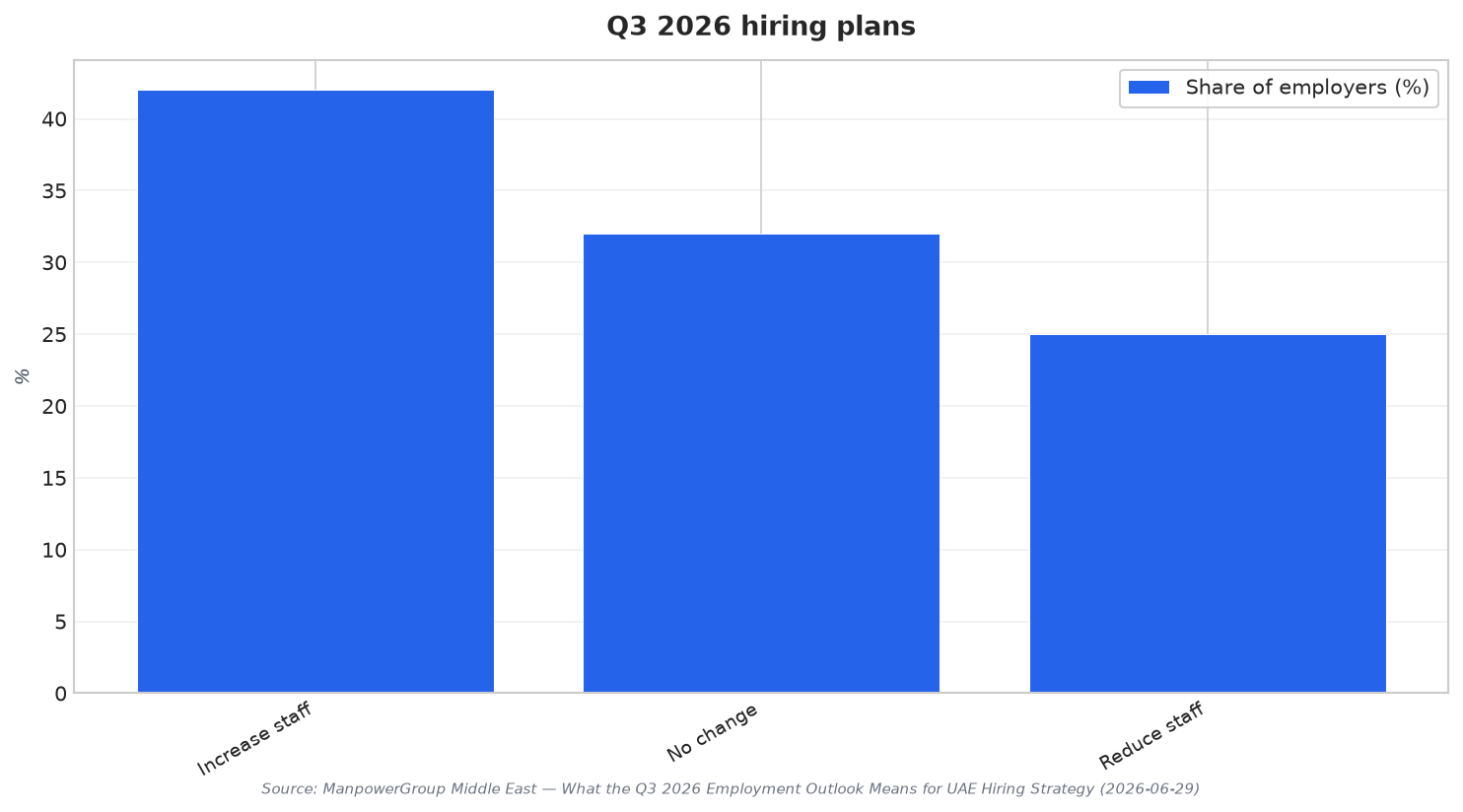
Planning assumptions should also reflect how tight the market is for skilled hiring. Manpower’s UAE outlook for Q3 2026, based on interviews with 546 employers conducted between 1 and 30 April 2026, put the Net Employment Outlook at 17%. In the same survey, 42% of employers planned to increase staff, 25% anticipated reductions, and 32% expected no change. Another Manpower commentary on the 2026 recruitment landscape says over 56% of UAE employers are planning headcount growth this year, while the UAE unemployment rate sits at approximately 1.9%. Employers that are expanding should expect competition and should budget time for sourcing, onboarding and work-permit readiness rather than treating those steps as administrative afterthoughts.
Work Permits, Payroll Enforcement, and Claim Risk Are Now Linked
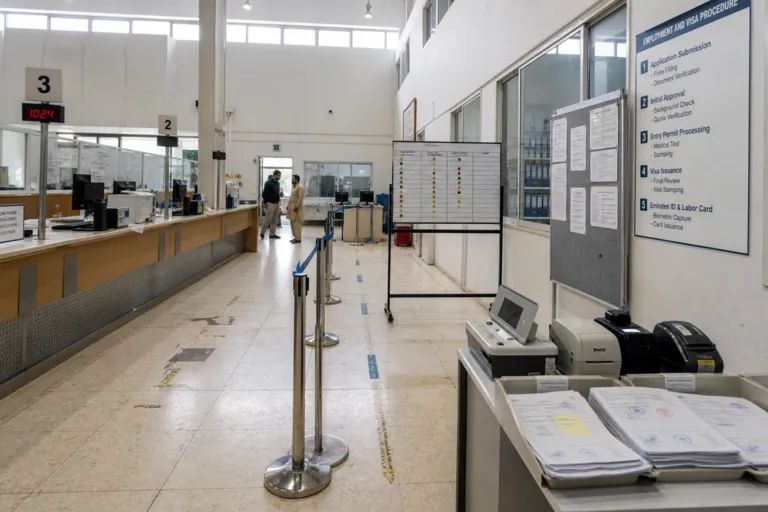
Compliance has become a workforce-planning variable, not just a legal checklist. Manpower notes that Resolution No. 340 repeals the previous Wage Protection System framework and introduces a tougher payroll compliance regime for the UAE private sector. The previous 15-day grace period is described as gone. Wages are due on the first day of every Gregorian month, with enforcement beginning from day two. The escalation timeline described is fast: work permit suspension by day five, administrative fines by day eleven, automatic labour dispute registration by day sixteen, and by day twenty-one potential travel bans, asset attachment, and public prosecution referral. Employers should connect payroll timetables to work-permit continuity and dispute exposure, because operational delays can now trigger cascading consequences.
Enforcement and process changes are also part of the broader reform posture. Ogletree notes increased enforcement of Emiratization quotas, higher labor law penalties, and stricter processes for filing claims against employers. It also highlights a potential mandatory transition from end-of-service gratuity to savings-based retirement schemes, which could reshape compensation structures for employers and expatriate workers. Employers may need scenario-based workforce plans that test cash flow, total rewards and contract structures under different outcomes, rather than waiting for final scheme design. In parallel, cultural and work-pattern reforms, such as the Monday–Friday work week adopted for federal government entities in January 2022 and widely adopted by the private sector, support cross-border coordination and can change scheduling assumptions for multi-country teams.
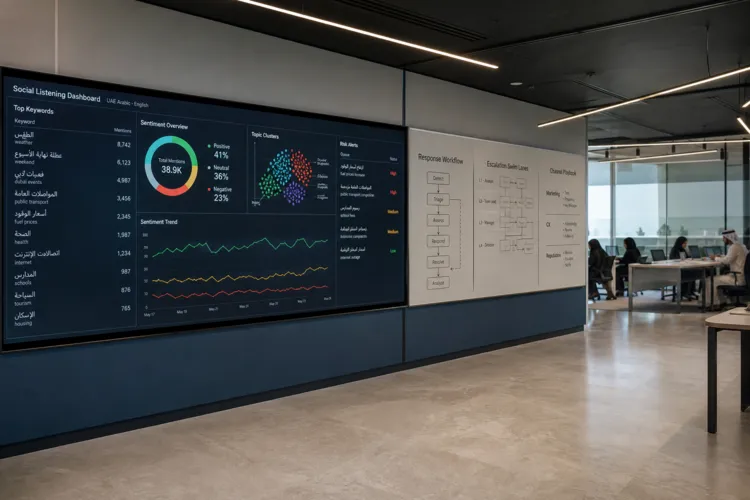
Data visibility is rising, which increases both opportunity and scrutiny. Emirates 24|7 describes MOHRE’s Labour Market Observatory (observatory.mohre.gov.ae) as a platform delivering real-time insights into workforce trends, wages, worker rights, social protection schemes and employment statistics through interactive dashboards. The “Holistic view” section includes categories such as Workforce, Companies, Female Workforce and Emiratisation, and each statistic includes a review-date time stamp. Employers can use this to ground workforce planning in current conditions, validate internal reporting, and benchmark hiring and compliance priorities. For context on talent attractiveness, Qureos cites global rankings that place the UAE 1st globally for its capacity to attract talented professionals in the Global Prosperity Index 2023 by the Legatum Institute, and calls it the most resilient labor market in the Arab World in Whiteshield’s Global Labor Resilience Index 2026.
How should employers plan for UAE labour market reforms in 2026?
What are the key Q3 2026 hiring signals from UAE employers?
What does the new payroll enforcement timeline mean for work permits?
Where can employers find official, up-to-date labour market dashboards in the UAE?