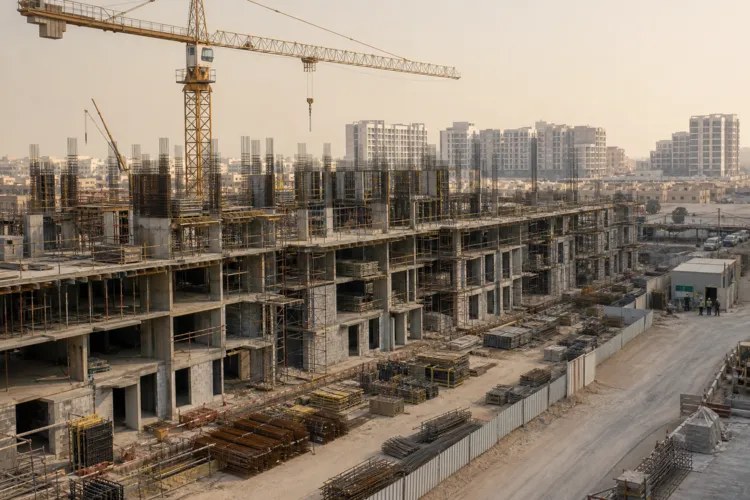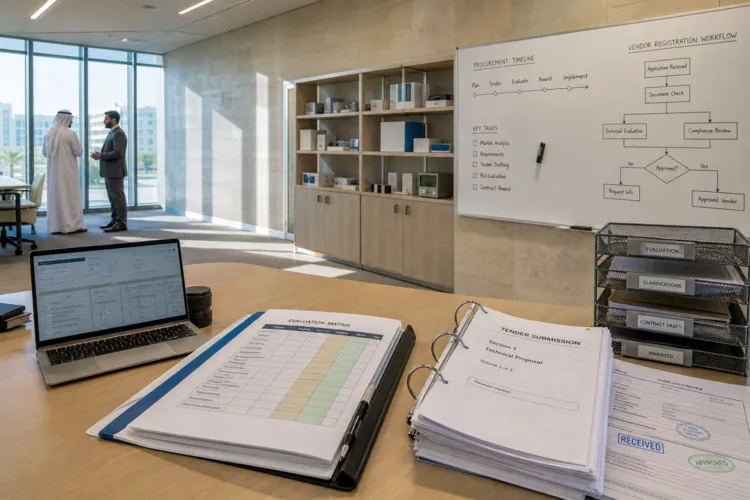

For contractors and suppliers watching the Abu Dhabi building materials market, the 2026–2030 pipeline is less about sudden volatility and more about sustained demand. A 2026 UAE construction cost forecast points to a moderate but firm increase of around 2.7%, describing a push-and-pull between stabilising global logistics and strong local demand from large-scale projects that absorb steel, concrete, and finishing materials. The same source estimates material costs at roughly 60% of baseline construction costs in the UAE, which raises the stakes for procurement planning, product certification, and schedule protection when availability tightens.
Steel demand has a clear structural driver: speed, repetition, and compliance on large sites. In the UAE prefabricated building and structural steel segment, MarkWide Research values the market at $3.8 billion in 2026 and forecasts it reaching $6.81 billion by 2035, compounding at 6.70% annually through 2035. The same report frames Abu Dhabi as an upstream anchor for steel production, noting integrated melt shop operations and identifying Emirates Steel as a supply chain anchor through an integrated melt shop and rolling mill complex in Abu Dhabi. In parallel, the report links mandatory green building regulations under Estidama and Al Sa’fat standards to specifications shifting toward lower-carbon steel and insulated panel systems.
Cement and Concrete Demand Meets Low-carbon Procurement Rules
Cement demand is also shaped by the region’s build mix, and the most direct quantified view in the provided sources is at GCC level. Mordor Intelligence sizes the GCC cement market at 115.86 million tons in 2026 and projects 141.67 million tons by 2031, at a 4.12% CAGR over 2026–2031. It adds that residential construction led consumption with a 64.12% share in 2025, and that blended cement demand is forecast to grow at a 5.18% CAGR through 2031 as policies favor lower-carbon formulations. For Abu Dhabi project teams, these figures are best read as regional context, while local material choices are increasingly steered by sustainability compliance on specific developments.
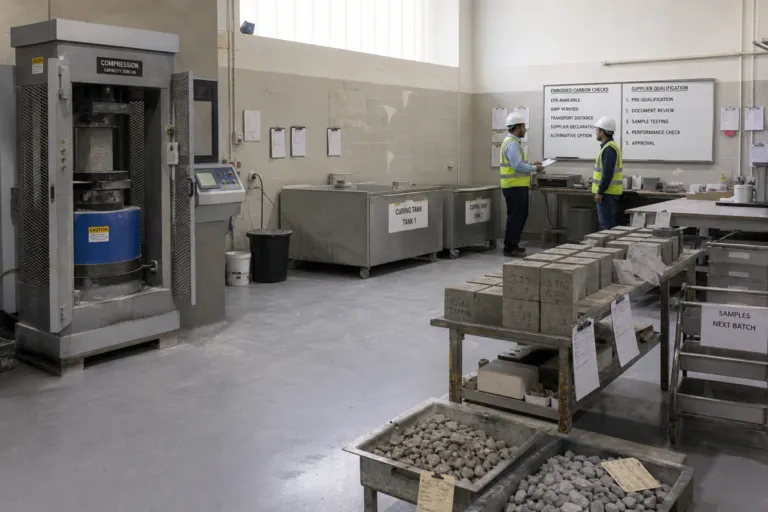
On the specification side, MarkWide Research highlights that Abu Dhabi’s Department of Municipalities and Transport requires minimum Pearl 2 ratings for new builds under Estidama, which accelerates the specification of low-carbon concrete and high-performance glazing in verticals such as hospitality and healthcare. The same UAE construction market source says embodied carbon limits are being pushed into procurement specifications, alongside mandatory building permits and occupancy certifications enforced by MOHAP for fire safety and structural integrity. This means demand is not only for volume. It is also for certified products, requalified suppliers, and delivery sequences that can pass certification checkpoints without delaying construction.
Cost and benchmarking signals from the UAE help set expectations for procurement strategies through 2026 and beyond, even when the numbers are city-specific. A Dubai-focused cost breakdown cites tender price inflation in the UAE at 3.3% in 2025, up from 1.9% the year before, and a 0.8% year-on-year increase in the Dubai Construction Cost Index in Q1 2025, driven by equipment hire rising 2.5% and labour wages climbing 1.6%. The same source references a 2025 global cost ranking placing Dubai 74th at approximately US$1,926 per square metre and Abu Dhabi 76th. For teams sourcing steel, cement, and compliant low-carbon alternatives, the common thread across sources is clear: stable logistics help, but local demand and compliance requirements keep procurement discipline central.
What is shaping demand in Abu Dhabi’s building materials market through 2026–2030?
What does the 2026 UAE construction cost outlook say about pricing pressure?
How large is the UAE prefabricated building and structural steel market in 2026?
What do the sources say about cement demand trends relevant to the region?
What sustainability requirement is cited for new builds in Abu Dhabi?