
Utility digitalisation is a practical pathway to improve visibility, reliability, and control across electricity networks. In Abu Dhabi, this direction is reinforced by the emirate’s weight in the national power system. Abu Dhabi accounts for 70% of the UAE’s total electricity generation capacity, according to an IMARC UAE power market report, which also describes smart grid technology and advanced metering systems as a main trend. Smart grids combine digital communication, sensing, and control to enable bidirectional energy flow, real-time demand management, and automated fault detection with sub-second response thresholds, per a UAE smart grid market analysis. For decision makers, that definition matters because it frames smart meters and AMI as foundational, not optional, building blocks.
Smart meters are central to how utilities translate digital ambition into measurable operations. MarketsandMarkets values the UAE smart meter market at USD 171.7 million in 2024 and projects it will reach USD 271.9 million by 2029, a CAGR of 8.0%. The same source links growth to national priorities around digital transformation and energy efficiency, and it notes that smart meter penetration is expanding across residential, commercial, and industrial facilities through regulatory mandates and utility modernization programs. In parallel, UAE smart grid analysis describes smart meters as dominating current deployment volumes, while it calls AMI the foundational data layer that attracts the fastest capital allocation because downstream analytics depend on it.
Demand Response Moves From Concept to Program Design
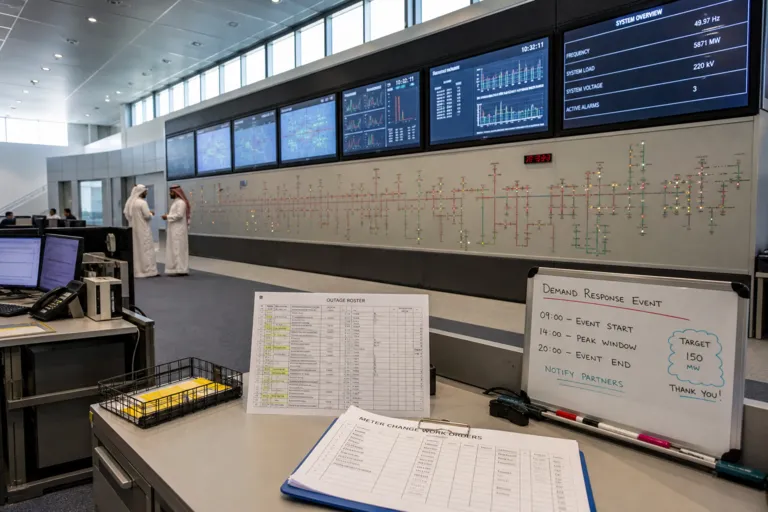
Demand response becomes more actionable once smart meter data is in place and utilities can target specific customer segments. An Abu Dhabi smart energy case study describes a demand response and energy efficiency platform designed to engage consumers in peak load reduction. The program concept uses smart meter data to run demand response events, including signaling thermostats to adjust by a few degrees during peak periods, with participating customers receiving a rebate. The same case study also proposes time-of-use pricing once smart meters are widespread, to incentivize shifting consumption away from peak hours. The operational payoff is described in plain terms: flatten the load curve and delay the need for new power infrastructure.
Investment priorities are also shaped by what global smart grid programs are buying now. A Global Market Insights report estimates the global smart grid market size at USD 73 billion in 2025 and expects a 10.5% CAGR through 2035, driven by growing energy demand, smart metering integration, and government investments in modernization. The same report says the consumer interface technology segment is the fastest growing, with a 12.5% CAGR, and it includes demand-response platforms and customer engagement applications in that category. It also notes that Saudi Arabia, the UAE, and South Africa anchor demand through AMI, distribution modernization, and grid upgrades, while pacing depends on utility capital allocation and national infrastructure priorities.
For stakeholders tracking the Abu Dhabi smart grid market, the near-term roadmap can be framed around three linked priorities. First is AMI scale-out across all consumer segments, which the Abu Dhabi case study describes as a plan to roll out smart meters broadly. Second is analytics and operational control, including platforms that use real-time field data to support automatic or semi-automatic decisions such as dynamic load balancing and loss reduction, plus a dedicated grid analytics unit. Third is interoperability and compliance, since UAE market analysis highlights the need to maintain interoperability with legacy SCADA systems while procurement cycles compress under the UAE Net Zero by 2050 strategy. Broader UAE digitalisation signals also matter. MarketsandMarkets reports a 21.3% CAGR for the UAE smart infrastructure market and points to digital transformation programs in Abu Dhabi as drivers of investment in connected systems.
Why are smart meters a priority for utility digitalisation in Abu Dhabi?
What is the UAE smart meter market outlook mentioned in the sources?
How can demand response work once smart meters are widespread?
What does the global smart grid market report say about growth and key technology segments?
What are practical investment priorities for the Abu Dhabi smart grid market based on the sources?