
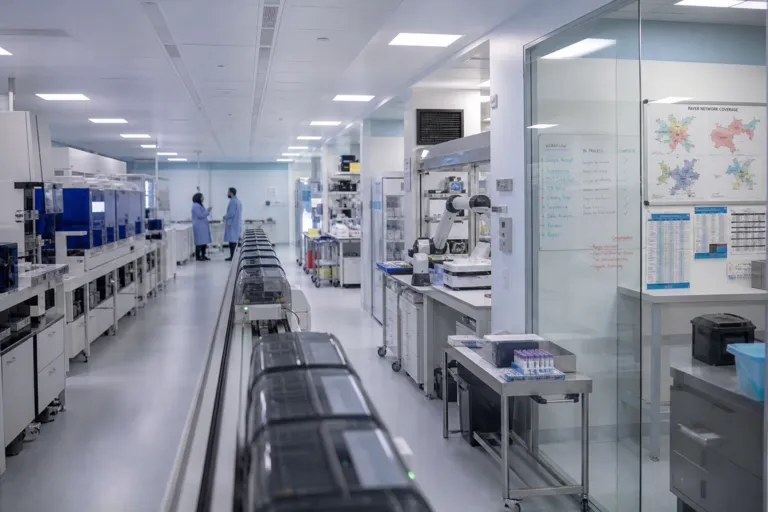
In the Abu Dhabi diagnostic laboratories market, strategy is being set by a UAE-wide move away from only routine testing and toward more specialized and preventive diagnostics. Nexdigm notes that demand has grown beyond routine blood tests and imaging, and that by 2025 a large share of testing volumes came from private lab chains and hospital networks, particularly in Dubai and Abu Dhabi. It also highlights rapid adoption of automation and high-end testing methods across leading facilities. This shift reflects patient expectations and an insurance environment that encourages early diagnosis to reduce long-term treatment costs.
Genomics and molecular diagnostics are also moving into mainstream workflows in the UAE, with Abu Dhabi positioned as one of the two dominant hubs alongside Dubai. Nexdigm reports that molecular diagnostics, genetic screening, and AI-assisted pathology are already in use across leading facilities. In carrier genetic testing and prenatal genetic testing, Nexdigm describes Dubai and Abu Dhabi as dominant for service adoption, supported by concentrations of advanced hospitals, fertility centers, and molecular laboratories. These settings integrate genomic services into routine care, and the prenatal genetic testing ecosystem also includes payer-related processes such as coverage criteria and prior authorization dynamics.
Lab Consolidation Meets High-Volume Testing Economics
Scale matters because routine testing remains the backbone of lab utilization even as advanced assays grow. In Nexdigm’s UAE diagnostic labs segmentation, clinical chemistry tests hold a dominant share due to routine screening demand across hospitals, clinics, and preventive programs. The same source states that hospital laboratories have a dominant share by end user because integrated hospital networks perform a high volume of tests across pathology, clinical chemistry, microbiology, and molecular diagnostics. Mordor Intelligence adds that, at a UAE level, immunodiagnostics led with 34.62% market share in 2025, while molecular diagnostics is forecast to expand at a 7.38% CAGR through 2031. It also notes that independent laboratories are forecast to be the fastest-growing end user at a 7.15% CAGR to 2031, which supports continued consolidation and network-building logic.
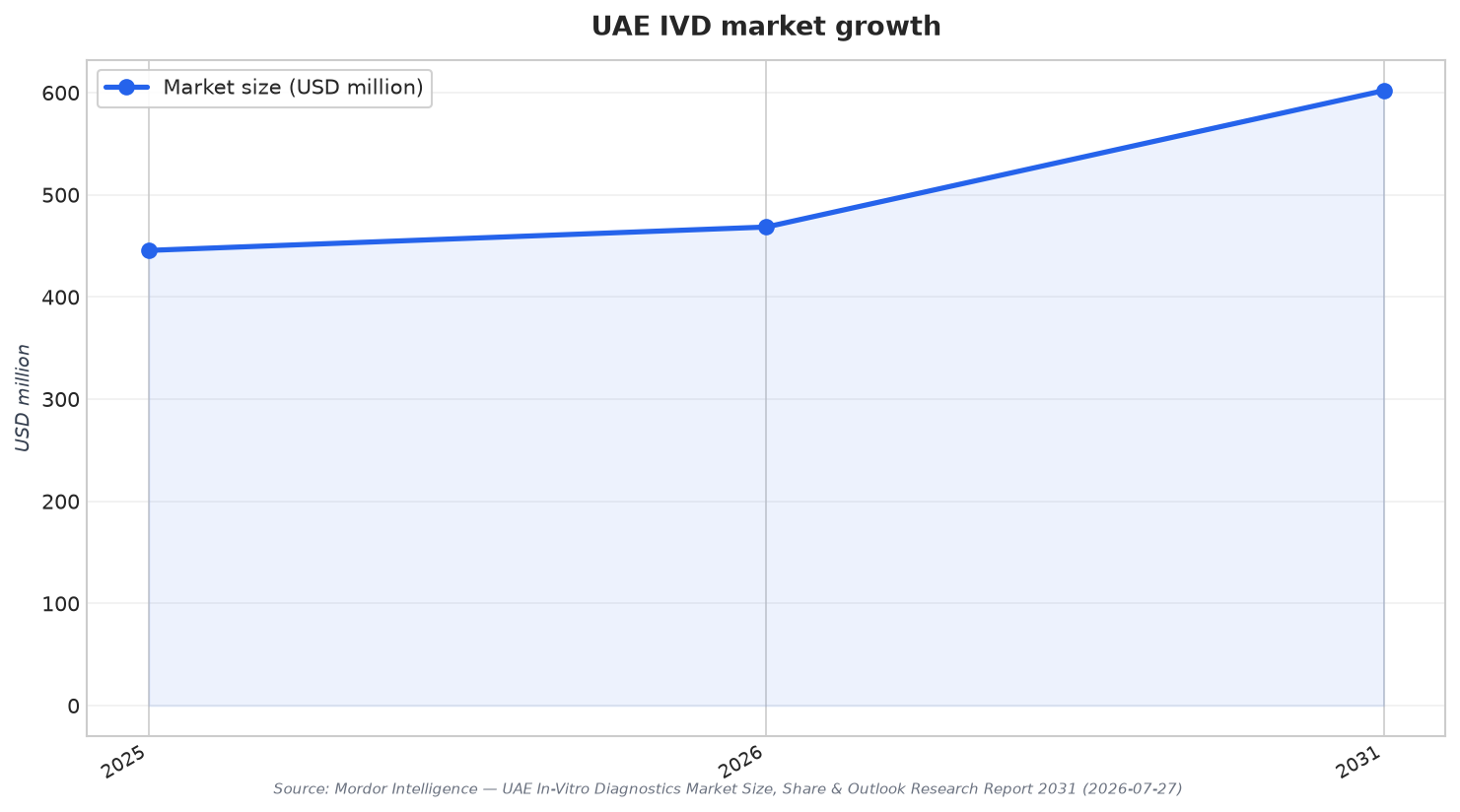
Payers and procurement dynamics are pushing laboratories to prove value in cost, speed, and compliance. Nexdigm links insurance behavior to increased testing, describing how insurers encourage early diagnosis, and how mandatory health insurance in several emirates makes patients more willing to undergo tests that might otherwise be delayed. In prenatal genetic testing, Nexdigm explicitly flags payer coverage criteria and prior authorization dynamics as part of lab selection. On the products side, Mordor Intelligence reports that reagents and consumables accounted for 52.02% of the UAE in vitro diagnostics market in 2025, while software and services show a 9.12% CAGR, reflecting increasing operational and digital requirements that payers and providers may scrutinize when selecting lab partners.
Looking toward 2027, the competitive playbook in Abu Dhabi will likely be shaped by three intersecting forces described across the sources: genomics-enabled testing, consolidation around high-throughput systems, and payer rules that govern access and volume. Mordor Intelligence describes the UAE as having the world’s most comprehensive population-wide genome program and notes that Abu Dhabi and Dubai channel sustained capital toward AI-enabled laboratory automation, while federal screening mandates guarantee high test volumes across chronic and infectious disease categories. MarketsandMarkets adds that UAE partnerships with international diagnostic companies and investment in genomic research infrastructure are accelerating market penetration. For labs in Abu Dhabi, that combination raises the bar on automation, reporting quality, and payer alignment as 2027 approaches.
What is driving change in Abu Dhabi’s diagnostic laboratory sector toward 2027?
Which test areas stand out in the UAE context that influences Abu Dhabi labs?
How do payers affect lab demand and lab selection?
What does consolidation mean for hospital labs versus independent laboratories?
How should stakeholders interpret the Abu Dhabi diagnostic laboratories market within UAE data?