

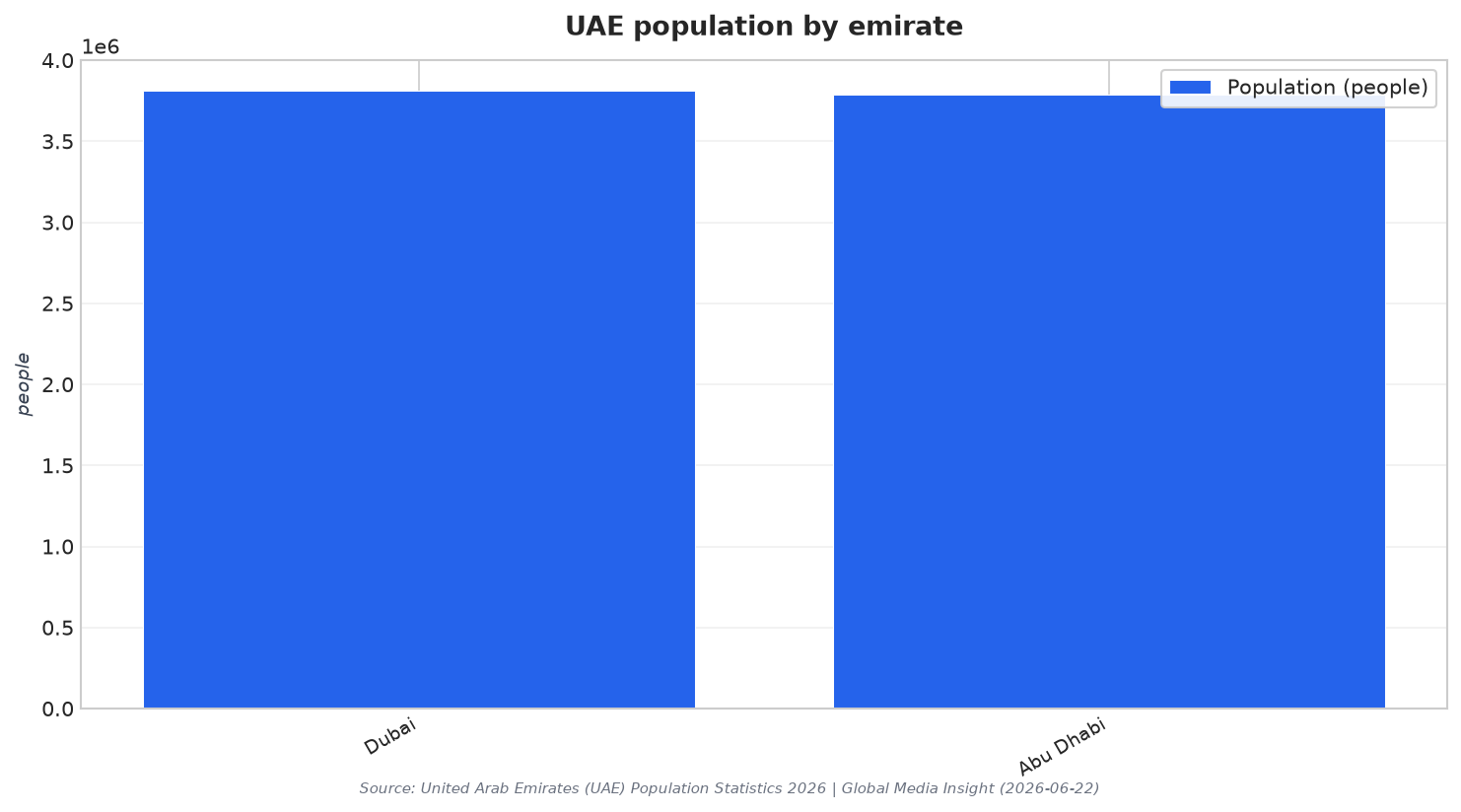
Abu Dhabi is entering 2026 with a population narrative defined by speed, scale, and measurement changes. One estimate puts Abu Dhabi’s 2026 population at 3,210,297, noting it grew by 124,446 in the last year, a 4.03% annual change. Another UAE-focused population distribution figure lists Abu Dhabi at 3,789,860 residents, showing how published totals can differ by source and methodology. A separate analysis argues the emirate has added the equivalent of its 2014 population more than once within a single decade, underscoring why brands, retailers, and service providers must plan for demand that keeps shifting year to year.
What is driving the boom matters as much as the headline totals. A register-based census system introduced in 2024 improved the precision of population tracking, and policy initiatives tied to a Digital Strategy 2025–2027 and a talent-first approach helped attract international professionals to high-skill sectors. At the same time, economic structure is changing. Non-oil sectors expanded by 6.2% in 2024 and contributed roughly 54.7% of total GDP, a shift that supports new job types and new consumer baskets. For marketers watching Abu Dhabi population growth 2026 dynamics, the key signal is that demand is being pulled by migration, diversification, and policy, not just natural increase.
Demographic Shifts That Translate Directly Into Demand
Several measurable demographic traits translate into specific spending patterns. One city profile reports an urban population of 1,698,961 versus a rural population of 1,085,529, pointing to where footfall, delivery density, and store placement can be optimized. It also reports a labor force at 83.1% of the total population, and an unemployment rate of 3.7%, conditions that typically support steady consumption in day-to-day categories. That same profile cites life expectancy of 75.9 years for men and 79.5 years for women, suggesting a long-run market for healthcare, preventive services, and household stability products. It also reports 441 schools teaching 373,586 students, a signal of sustained demand for education-linked retail, family housing preferences, and child-focused services.
Housing and local services are already reacting to the population surge. A 2026 real estate market analysis states demographic trends are one of the most important factors pushing housing prices up because population growth needs more homes and the supply pipeline is not large enough to keep pace. It also claims Abu Dhabi added over 290,000 people in 2024 alone, reaching 4.14 million, a 7.5% jump in a single year, and ties the change largely to net migration of expatriate professionals drawn by sectors such as finance, healthcare, technology, and government-linked industries. The same analysis reports rents increased over 20% year-on-year in late 2025, with vacancy rates remaining low across most residential districts, implying higher competition for rentals and stronger demand for furnishing, move-in services, and neighborhood retail.
For consumer demand planning, Abu Dhabi should also be viewed inside a broader regional context. As of 2026, the total GCC population is estimated at approximately 64.8 million people, with growth fueled by expatriate migration, economic reforms, and urban development initiatives. UAE-focused commentary notes that most residents concentrate in major urban centers such as Dubai, Abu Dhabi, and Sharjah, and frames this as a direct input into geo-targeting and local SEO decisions. In practice, that means brands can shift budget toward high-density districts, tune product assortments for internationally mobile professionals and families, and build service capacity around a workforce scale cited at 2.52 million in one Abu Dhabi census-based summary.
What are the key signals behind Abu Dhabi’s population growth in 2026?
What 2026 population figures are being reported for Abu Dhabi?
How is population growth affecting housing demand in Abu Dhabi?
What demographic traits shape everyday consumer demand in Abu Dhabi?