
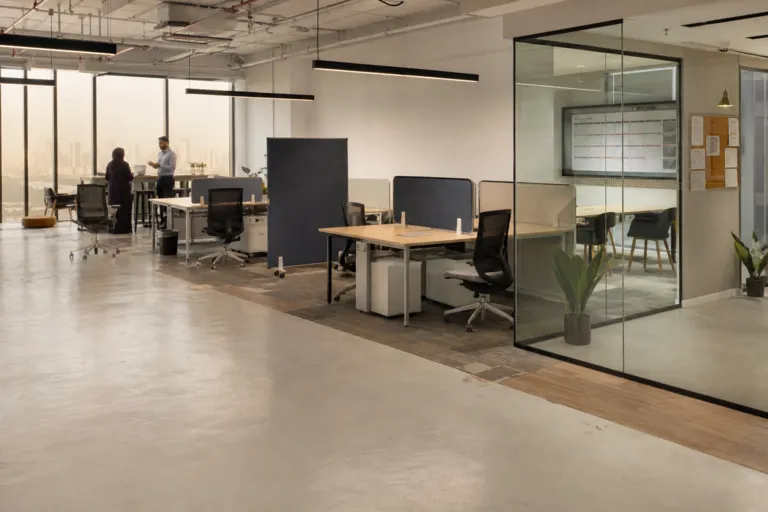
Abu Dhabi’s office occupiers are showing ongoing commitment, while also leaning into flexibility. JLL reported that Abu Dhabi recorded more moderate growth at 5.4% annually, led by contract renewals, and noted that landlords are prioritising timely completion of developments to capitalise on robust underlying demand and pre-lease commitments already secured across numerous projects. In the same update, JLL described the flexible workspace segment as continuing to expand as companies look for lower-risk alternatives with reduced capital requirements and shorter lease commitments. This mix of renewal-led stability and demand for adaptable space sets the context for how flex operators position product, pricing, and partnerships in the emirate.
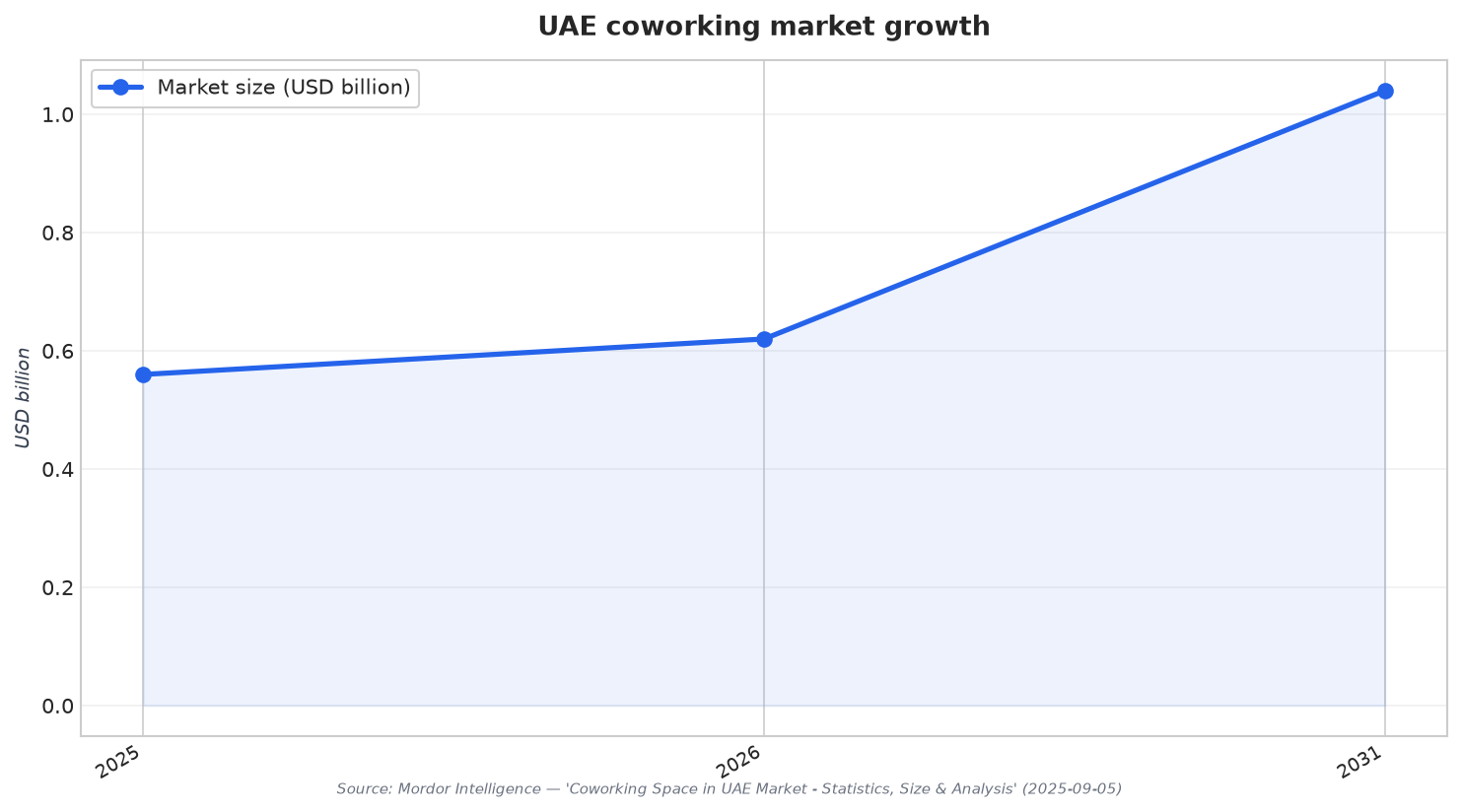
UAE-wide statistics also frame what demand can look like for the Abu Dhabi flexible workspace market, while keeping the geographic scope clear. Mordor Intelligence valued the UAE co-working office space market at USD 0.56 billion in 2025, and estimated growth from USD 0.62 billion in 2026 to USD 1.04 billion by 2031, at a CAGR of 10.86% (2026–2031). In that UAE dataset, Dubai held 68.65% market share in 2025, while Abu Dhabi was projected to advance at a 12.18% CAGR through 2031. The same source noted rents rising sharply, with 22% in Dubai and 11% in Abu Dhabi, describing a bifurcation between cost-conscious start-up spaces and enterprise-grade centers.
Occupier Demand and What Tenants Are Buying
Demand in Abu Dhabi is being pulled by several occupier types that map cleanly to flexible formats. MarkWide Research described technology firms and fintech startups as compressing lease cycles across Dubai and Abu Dhabi, pushing operators to deploy modular fit-outs and IoT infrastructure within weeks rather than months to capture venture-backed tenants. It also highlighted Abu Dhabi’s Hub71 cluster policy as a catalyst, attracting venture capital firms seeking turnkey office solutions and creating concentrated demand for premium flexible workspaces. Within coworking and flexible offices, MarkWide Research outlined how hot desking attracts high-volume turnover among freelancers and remote workers, while private office configurations command premium rates from enterprise clients seeking satellite locations without capital deployment.
Operator models in the emirate are also shaped by where supply can realistically scale and what compliance requires. MarkWide Research noted that supply concentrates in Dubai’s DIFC and Abu Dhabi’s Al Maryah Island, which it linked to limited expansion options and higher base rents for new entrants. It also stated that demountable partition materials can carry 40–60% premiums over conventional construction, compressing margins during rapid scaling phases. On the regulatory side, MarkWide Research described MOHAP workplace health standards for shared environments and licensing frameworks that permit flexible workspace operations, while also pointing to divergent tenant qualification rules across Dubai International Financial Centre and Abu Dhabi Global Market that can fragment operational permissions for multi-location providers.
Going into 2026, growth expectations are reinforced by both local signals and broader market context, without conflating geographies. A global market report from Global Growth Insights said the demand for coworking spaces is growing in cities like Dubai and Abu Dhabi, and estimated the Middle East & Africa region at approximately 10% of the global coworking space market. NextMSC observed that capital allocation is increasingly favoring asset-light expansion models such as management agreements and franchising, and cited an executive view that “20 to 30%” of corporate real estate will be flexible working environments. In UAE-specific operator positioning, MarkWide Research said IWG sustains the widest geographic footprint through Regus and Spaces, anchoring premium locations in Dubai International Financial Centre and Abu Dhabi Global Market.
What signals occupier demand in Abu Dhabi’s office market right now?
How fast is Abu Dhabi expected to grow within the UAE coworking market?
What is driving the Abu Dhabi flexible workspace market from a tenant perspective?
Which operator model themes matter most for 2026 expansion plans?