
For 2027 strategy, the Abu Dhabi medical devices market should be viewed inside the wider UAE ecosystem. The UAE is the GCC’s second-largest medical device market at approximately US$1.8 billion in 2026 and is growing around 8% annually, supported by medical tourism, insurance expansion, and hospital investment. About 95% of devices are imported, which makes channel design and local execution decisive. Regulation also shapes commercialization. Medical device registration is handled nationally by the Ministry of Health and Prevention (MOHAP), while emirate-level authorities such as the Abu Dhabi Department of Health (DoH) influence facility licensing and local procurement channels.
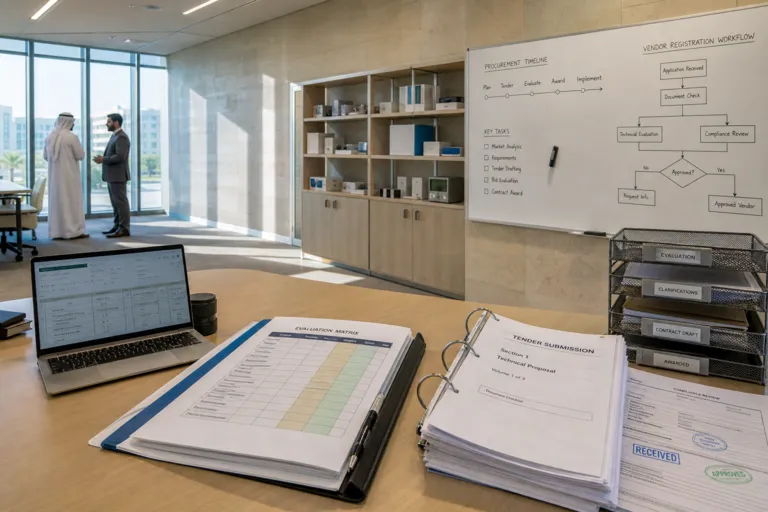
Procurement routes in Abu Dhabi increasingly reflect centralization and scale purchasing. In the UAE, procurement is described as increasingly centralized through government consolidators such as MOHAP and Abu Dhabi Health Services Company (SEHA), using framework agreements for multi-year, multi-facility contracts. Large public buyers issue formal tenders with technical specifications, quality requirements, and multi-year service commitments. Tender volumes in this context are typically 50–300 units per tender for weighing and measurement equipment, and the same procurement mechanics often spill over into other device categories where calibration, preventive maintenance, and lifecycle support matter. In parallel, provider-side purchasing groups, including PureHealth in Abu Dhabi, are increasingly centralizing demand across their networks.
Local Distribution Partners and Why They Matter in Abu Dhabi
Distribution is not only a logistics function in Abu Dhabi. It is also a market-access engine that connects suppliers to tenders, service obligations, and local credibility. UAE distributors such as Gulf Drug, Al Zahrawi Medical, AMICO Group, and Al Maqam Medi are described as anchoring distribution across all seven emirates, including support for MOHAP registration, tender access, and service coverage. This matters because competitive pressure can be intensified by long-term distribution deals held by established global brands. A local case study also notes that procurement in Abu Dhabi’s healthcare system often favored companies with local presence or those already on pre-approved vendor lists, and that a distribution agreement with a prominent Abu Dhabi-based healthcare supplier expanded reach to government hospitals.
Regulatory planning for 2027 should be built around a federal-plus-emirate pathway rather than a single approval step. MOHAP registers medical devices nationally, with a typical 3–6 month timeline when FDA/CE reference approvals are used. However, compliance can extend timelines: one UAE market report notes that regulatory compliance under MOHAP requirements and the Emirates Authority for Standardization and Metrology (ESMA) can add 6–12 months to market entry timelines and create recurring costs for quality system documentation. For 3D printed devices, the federal MOHAP framework is paired with additional requirements from emirate-level health authorities, including DoH in Abu Dhabi, and patient-specific implants are typically classified as Class IIb or III, requiring conformity assessment and product registration, plus design documentation and traceability for custom-made pathways.
Demand-side fundamentals also influence procurement choices that manufacturers will face in 2027. The UAE’s role as a regional healthcare hub is linked to serving a population of roughly 10–11 million, and demand is described as concentrated in hospital settings, particularly tertiary-care and specialty facilities in Dubai, Abu Dhabi, and Sharjah. The expatriate share is described as roughly 85–90% of the population, which tilts demand toward employer-funded insurance and out-of-pocket spending rather than a single-payer model. Capacity build-out is a visible signal for supplier planning. The UAE hospital bed count is forecast to rise from approximately 15,000 beds in 2025 to over 20,000 beds by 2030, driven by new facilities including in Abu Dhabi, which reinforces the need to align regulatory timing, distributor readiness, and service infrastructure before large framework tenders open.
How should companies approach the Abu Dhabi medical devices market for 2027 planning?
Which procurement channels are most important for medical devices in Abu Dhabi?
Who are common local distribution partners used in the UAE for medical devices?
What are typical registration and compliance timelines for entering the UAE medical device market?
How do regulations differ for patient-specific or 3D printed devices in Abu Dhabi?